Products You May Like
How much of your CRM can you actually trust right now? It is a simple question, but for most Revenue Operations (RevOps) leaders, the answer is often unsettling. We spend millions on sophisticated tech stacks, yet our sales reps still call inactive numbers. Our marketing teams still send emails to ghost accounts. Our executive reports often feel more like best guessesthan data-driven truths.
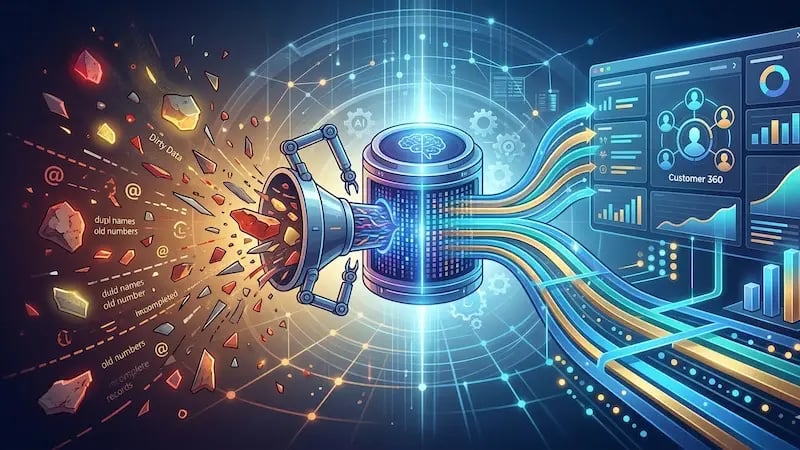 In RevOps, data is the fuel. But right now, most engines are running on “dirty” fuel. This isn’t just a minor technical glitch; it is a silent revenue killer.
Poor data quality costs organizations an average of $12.9 million per year in wasted resources and lost opportunities.
As we move through theyear, the manual “spring cleaning” of your database is no longer enough. To scale, you need a system that cleans itself. This is where AI in RevOps steps in. By focusing on data hygiene, AI transforms your CRM from a digital junkyard into a high-performance engine.
The Anatomy of “Dirty Data” in Modern CRMs
What do we mean when we talk about dirty data? It isn’t just a few typos. It’s a systemic decay that happens the moment information enters your system.
In fact, B2B data rots at an alarming rate of roughly 30% every year.
People change jobs, companies merge, and phone numbers get reassigned.
In fact, recent studies from 2024/25 have found that,
Email-specific decay can spike as high as 3.6% in a single month during periods of high economic volatility or restructuring
This decay creates a “data debt” that compounds over time, making it harder for your teams to find the truth.
Common symptoms of poor data hygiene include:
-
The Duplicate Dilemma: “J. Smith” and “John Smith” exist as two separate leads, leading to double-outreach and a frustrated prospect.
-
The Formatting Nightmare: Phone numbers without country codes, names in all caps, or addresses that don’t exist.
-
The Human Factor: Well-meaning sales reps skipping fields or marketing forms that don’t validate entries.
-
The Tech Gap: Disconnected tools that don’t talkto each other, creating silos where the “truth” depends on which app you open.
The impact is felt across the entire funnel. Marketing sees high bounce rates. Sales loses time on research. Customer success lacks the full context of the buyer’s journey. It’s a friction point that slows everything down.
Think about a sales rep reaching out to a “hot lead” only to find out the person left the company six months ago. Not only is that time wasted, but it also hurts your brand’s credibility. When your data is messy, your customer experience will be messy, too.
Why Manual Hygiene is a Losing Battle
For years, the solution to bad data was manual labor. We hired interns or tasked junior ops roles with “cleaning the list.” But in a modern high-growth environment, humans simply can’t keep up. The speed of business has outpaced the speed of a spreadsheet.
The volume of data signals we manage today—from website visits and intent data to social interactions and product usage—is too vast. By the time a person manually cleans a dataset, new “dirty” data has already flooded the gates. This creates a human Lagthat keeps your team perpetually behind the curve.
Statistics show that sales and marketing departments waste up to 32% of their time dealing with data quality issues instead of focusing on actual growth.
That is nearly two days of every work week spent on administrative cleanup rather than closing deals.
When you factor in the complexity of modern tech stacks—integrating HubSpot, Salesforce, ZoomInfo, and various AI sales tools—the risk of data friction grows exponentially. You need a solution that works at the speed of the cloud and understands the context of your business.
AI to the Rescue: Automating the Cleanup
This is where AI in RevOps changes the game. Artificial Intelligence acts as a 24/7 custodianfor your CRM. It doesn’t get tired, it doesn’t overlook small details, and it works in real-time. It moves from reactive cleaning to proactive prevention.

How does AI-driven data hygiene actually work?
1. Fuzzy Matching and Deduplication
Traditional deduplication tools look for exact matches. AI uses fuzzy matchingto recognize that IBM and International Business Machinesrefer to the same entity. It can spot that two records belong to the same person even if the email formats or job titles vary slightly. This creates a true single source of truth. This prevents the split-accountproblem where half your data lives in one record and half in another.
2. Real-Time Enrichment
Instead of relying on what a prospect types into a form, AI can pull from external data sources—like company registries or LinkedIn—to fill in the blanks. If a lead provides only an email, AI can automatically populate their job title, company size, industry, and even the technologies they currently use. This keeps your forms short and your conversion rates high.
3. Predictive Cleansing and Validation
Advanced AI models can identify patterns of error before they propagate. For example, if it notices a spike in invalid email formats from a specific lead source, it can flag the issue for the RevOps team immediately, preventing the trash in, trash outcycle. It can also validate data against real-world changes, such as a company moving offices or changing its primary domain.
4. Security, Compliance, and Risk Mitigation
Clean data is safer data. Organizations using AI and automation in their data processes,
Have seen their data breach lifecycle fall by 80 days, and costs drop by $1.9 million due to better visibility.
When you know exactly what data you have and where it is, you reduce your risk profile significantly. It makes GDPR and CCPA compliance much easier to manage because you aren’t chasing ghosts in your database.
The Strategic Advantages of AI-Driven Data Hygiene
When your data is clean, every other part of your RevOps strategy works better. It isn’t just about tidy folders; it’s about revenue performance. It’s about building a foundation that can actually support your growth goals.
Improved Sales Productivity and Focus
When reps can trust the data in their CRM, they spend less time on detective workand more time on high-value conversations. They know the person they are calling is still at the company and that their job title is correct.
AI-powered CRM systems can drive a 15-20% increase in sales productivity and a 10-15% increase in revenue.
This allows your top talent to focus on strategy rather than searching for phone numbers.
Enhanced Lead Scoring Accuracy
AI-driven lead scoring is only as good as the data it analyzes. If your records are missing industry information or company size, the AI will give you an inaccurate score. With automated data hygiene, your scoring models become incredibly precise. This ensures that Sales receives only leads who are truly ready to buy, reducing friction between teams.
Accurate Attribution and Forecasting
How do you know which marketing campaign truly drove the deal? Attribution requires a clean trail of touchpoints. If your data is fragmented across duplicate records, your attribution report will be a mess. AI stitches these interactions together, giving you the clarity needed to invest your budget where it actually works. This leads to more accurate forecasting, as your weighted pipelineis based on real, verified data points rather than outdated estimates.
Implementation: Moving from “Dirty” to “Dynamic”
If you are ready to move past manual spreadsheets and embrace AI in RevOps, the transition should be methodical. You can’t fix everything overnight, but you can build a system that fixes things as they happen. It’s about changing your organization’s data culture.
Step 1: The Full Data Audit
Start by identifying your data leaks. Where is the bad data coming from? Is it a specific web form? A legacy integration? Or perhaps a specific sales team that isn’t following the process? You need to know where the dirtstarts so you can stop the bleed.
Step 2: Integration Alignment and Mapping
Your tech stack must speak the same language. If your marketing automation tool uses State and your CRM uses Region,you will have issues. AI tools can help map these fields and normalize the data across all platforms. This ensures that every tool in your stack has access to the same, clean information.
Step 3: Shift to Continuous Hygiene and Enrichment
Don’t wait for a quarterly cleanup. Implement tools that perform entry-point cleansing.This means the data is checked and corrected the moment it enters the CRM. This is the difference between cleaning a room and having a self-cleaning house.By enriching data at the point of entry, you ensure your automation workflows trigger correctly every time.
Consider the example of a high-growth tech firm that struggled with lead routing. Their leads were frequently assigned to the wrong reps because of missing Industry or Employee Count data. By implementing an AI-driven enrichment tool, they were able to verify and fill those fields in real-time.
The result?
Lead routing accuracy jumped from 60% to 98%, and their speed-to-lead time dropped by hours. Their sales team stopped complaining about “bad leads” and started hitting their quotas.
Future-Proofing Your Revenue Engine
We are entering an era where data is no longer a static asset; it is a dynamic, living part of your business.
By the end of this year,it’s expected that 81% of organizations will be using AI-powered CRM systems to stay competitive.
Those who fail to automate their data hygiene will be left behind, buried under the weight of their own “dirty” databases.
If you are in the consideration stage of your journey, evaluating how to optimize your operations, the choice is clear. You can continue to fight the losing battle of manual data entry, or you can leverage AI to create a foundation that supports scale. The future belongs to those who have the cleanest data and the fastest insights.
The goal of RevOps is to remove friction. And there is no greater friction than bad data. When you automate your data hygiene, you don’t just “clean up” your CRM; you unlock the true potential of your team. You allow your marketers to be more creative, your sales reps to be more persuasive, and your leaders to be more strategic.
The Role of Expertise in RevOps
Navigating the world of AI in RevOps can feel overwhelming. With so many tools promising “magic” results, it is easy to get lost in the noise. The key isn’t just buying the right software; it’s about building the right strategy. You need a partner who understands the nuances of revenue growth.
At Aspiration Marketing, we understand that every organization has a unique data DNA.We specialize in helping companies bridge the gap between “dirty data” and a high-performance revenue engine. Whether you are dealing with a complex HubSpot implementation that needs a “reset,” or you are looking to integrate advanced AI into your existing RevOps strategy, we provide the expert guidance you need.
Our team doesn’t just look at the software; we look at the people and the processes that drive it. We help you ensure that your data works for you—not against you. By focusing on sustainable data hygiene and intelligent automation, we help you build a CRM that serves as your most valuable asset and a true engine for growth.
Are you ready to stop fighting your data and start using it? Let’s build a revenue engine that is clean, clear, and ready to scale.