Products You May Like
Lockheed Martin is moving to accelerate production of the AIM-260 Joint Advanced Tactical Missile under a new framework agreement with the U.S. Department of War, bringing a previously highly secretive air-to-air weapons programme into a new phase of industrial expansion. The agreement is intended to increase production capacity and delivery rates while creating the basis for a future multiyear procurement contract, subject to congressional approval.
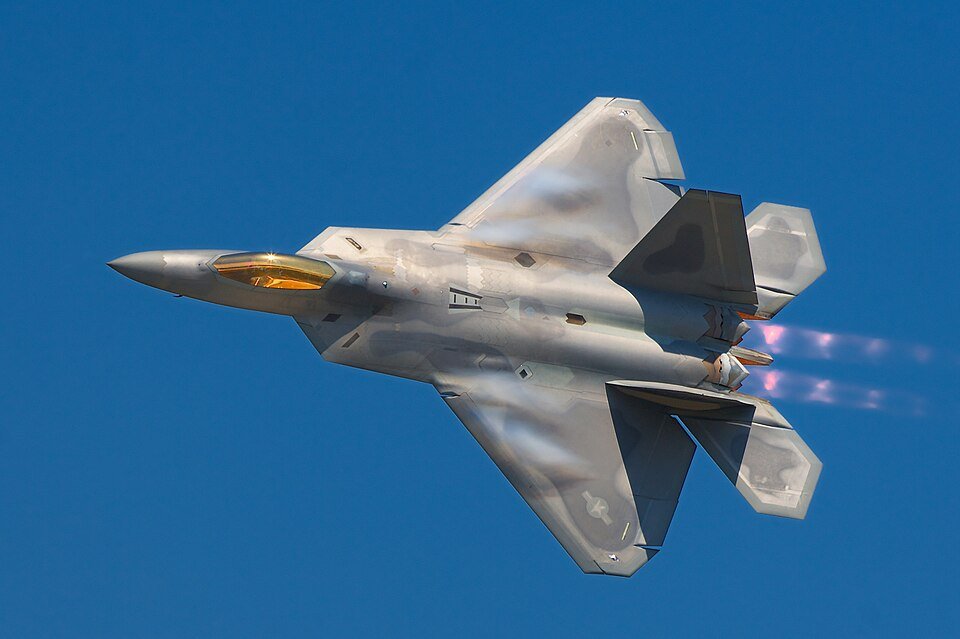
The AIM-260, also known as JATM, has been developed as a next-generation air-to-air missile for the U.S. military. Lockheed Martin says the weapon offers greater range and effectiveness than existing air-to-air systems and is compatible with aircraft including the F-22 Raptor and F-35 Lightning II. Many of the missile’s performance details remain classified, reflecting the sensitivity surrounding the programme.
The production agreement is significant not only because of the missile itself, but because of the industrial model being put around it. Lockheed Martin will support investment needed to increase manufacturing capacity, while the Department of War is seeking to provide longer-term demand signals to suppliers. Michael P. Duffey, Under Secretary of War for Acquisition and Sustainment, said the framework was designed to give the defence industrial base greater certainty around future requirements, allowing investment in manufacturing capacity, workforce and production efficiencies.
Lockheed Martin Missiles and Fire Control president Tim Cahill is leading the company’s side of the programme. The company said JATM is being produced in partnership with the U.S. Air Force and U.S. Navy, making the acceleration effort dependent on coordination across government procurement, prime contracting and a wider network of specialist suppliers.
That structure carries a wider lesson for executive teams managing businesses where capacity cannot be expanded quickly. Large-scale production programmes require capital to be committed well before the finished product is delivered, while suppliers must decide whether expected future orders justify investment in equipment, people and additional facilities. A multiyear procurement framework can reduce some of that uncertainty by giving manufacturers a clearer view of expected demand.
International orders are also beginning to broaden the programme. Australia announced in August that it would invest almost A$736 million to acquire the AIM-260 through the U.S. Foreign Military Sales system, becoming the first country outside the United States expected to operate the weapon. The missiles are due to be integrated initially with Australia’s F/A-18F Super Hornet, followed by the F-35A Lightning II and EA-18G Growler.
The AIM-260 agreement comes as Lockheed Martin is pursuing faster production elsewhere in its missile business. On the same day, the company announced that GM Defense had delivered components for its PAC-3 Missile Segment Enhancement interceptor less than one month after the companies signed their formal contract, illustrating how established manufacturers are increasingly being brought into defence supply chains to increase capacity.
For Lockheed Martin and its government customers, the challenge now moves from developing advanced capability to producing it at greater scale. For other industrial businesses, the programme illustrates how long-term customer commitments, internal capital investment and supplier capacity can become closely linked when demand rises faster than conventional manufacturing systems can respond.