Products You May Like
From debating the birth of the universe at twelve to working with the world’s biggest recording artists, Howard Bloom has spent his life studying the forces that change history.
Some careers are difficult to explain. Howard Bloom’s is almost impossible to categorize.

How does a young man fascinated by theoretical physics, computer engineering, and cosmology become one of the most respected publicity figures in music history?
For Bloom, the answer has always been surprisingly simple: curiosity.
The same instinct that led him to question the creation of the universe eventually brought him face-to-face with Michael Jackson, Prince, Bob Marley, Billy Joel, and a generation of performers who transformed popular culture.
And somewhere along the way, he discovered that understanding a rock star’s influence might reveal as much about human nature as studying distant galaxies.
Born in Buffalo, New York, on June 25, 1943, Bloom showed an extraordinary appetite for scientific knowledge from childhood.
At twelve years old, he was already investigating one of the great mysteries of modern physics: how the universe began.
That fascination led to a discussion with the head of the graduate physics department at the University of Buffalo concerning the Big Bang and Steady State models of cosmology.
At a time when leading scientists were fiercely debating whether the universe had a beginning, Bloom was already examining the arguments for himself.
His intellectual curiosity was matched by a passion for building things.

As a youngster, he co-designed a game-playing computer that received science fair recognition. He also constructed a Boolean algebra machine, working with principles of mathematical logic that would help define modern computing.
This was during an era when computers remained mysterious, enormous machines to much of the public.
For Bloom, however, technology was not intimidating. It was another doorway into the unknown.
His unconventional scientific education continued through mentorship from an aerospace research and development leader whose company had contributed specialized components to the Bell X-1 and Bell X-2 programs.
The Bell X-1 became famous for breaking the sound barrier, while the Bell X-2 pushed experimental flight toward the extreme boundaries of altitude and speed.
Exposure to such pioneering work reinforced Bloom’s belief that accepted limits were meant to be questioned.
At sixteen, his scientific interests took an even more ambitious direction.
During his time at Roswell Park Memorial Institute, Bloom developed a personal cosmological framework intended to explain the universe’s beginning, evolution, and eventual destiny.
Bloom has maintained that his early ideas anticipated concepts later associated with cosmic inflation and dark energy.
Cosmic inflation became a major area of theoretical physics following Alan Guth’s work in 1980. The discovery in 1998 that the universe’s expansion is accelerating subsequently transformed cosmology and contributed to the awarding of the 2011 Nobel Prize in Physics.
While Bloom’s claims of early anticipation are his own retrospective account, they illustrate the scale of the scientific questions he was pursuing as a teenager.
Then came the unexpected twist.
Instead of remaining within the traditional boundaries of academic science, Bloom became fascinated by something he believed scientists were largely overlooking: popular culture.
Music, celebrity, social movements, and mass enthusiasm were not trivial distractions to him.
They were expressions of human behavior on a massive scale.
Why do millions of people become emotionally attached to certain performers? How does an artist become a cultural symbol? What transforms a song into a movement or a personality into a legend?
To Bloom, these were scientific questions waiting to be explored.
And rock and roll offered the perfect opportunity.
In 1976, he established The Howard Bloom Organization and entered a world of recording artists, managers, record companies, journalists, and extraordinary personalities.
His clients and professional associations eventually included Michael Jackson, Prince, Bob Marley, Billy Joel, and numerous other leading figures in popular music.
Bloom brought an unconventional perspective to his work. He understood that successful publicity involved more than securing magazine coverage or television appearances.
It meant understanding the psychological relationship between an artist and the audience, the cultural significance of music, and the sometimes unpredictable forces that turn entertainers into icons.
His reputation grew accordingly.
Derek Sutton, the former manager of Styx, praised Bloom as the greatest press agent in rock and roll history, a remarkable endorsement from someone deeply familiar with the music business.
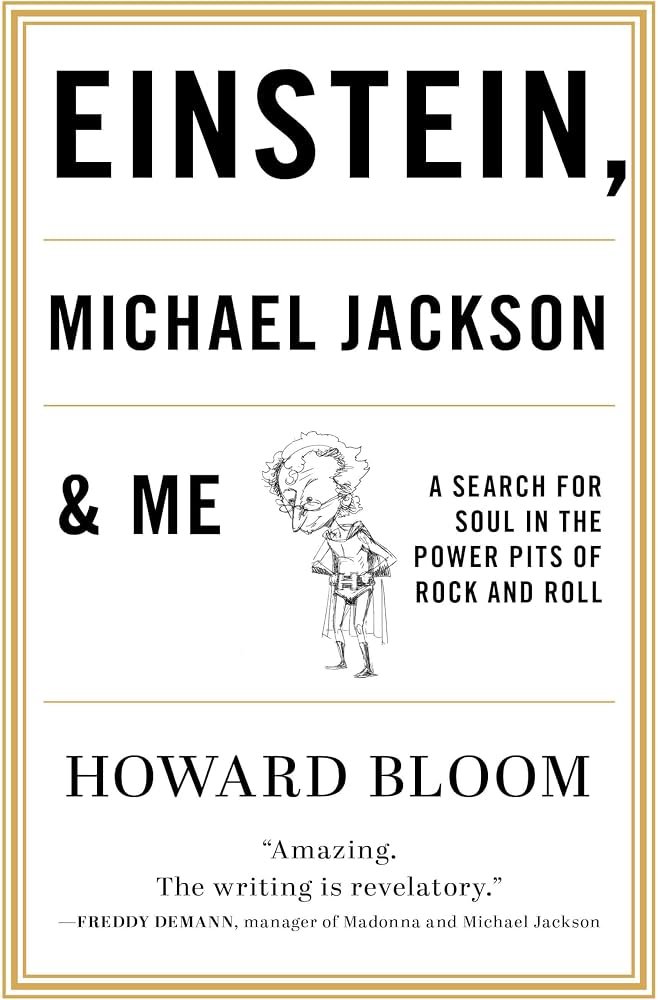
Bloom later revisited this extraordinary period in his memoir, Einstein, Michael Jackson & Me: A Search for Soul in the Power Pits of Rock and Roll.
With a foreword by rock legend Joan Jett, the book reveals the connections Bloom sees between scientific exploration, creative genius, celebrity, and the relentless search for understanding.
But even while building his reputation in entertainment, Bloom continued developing his ideas about the nature of life and civilization.
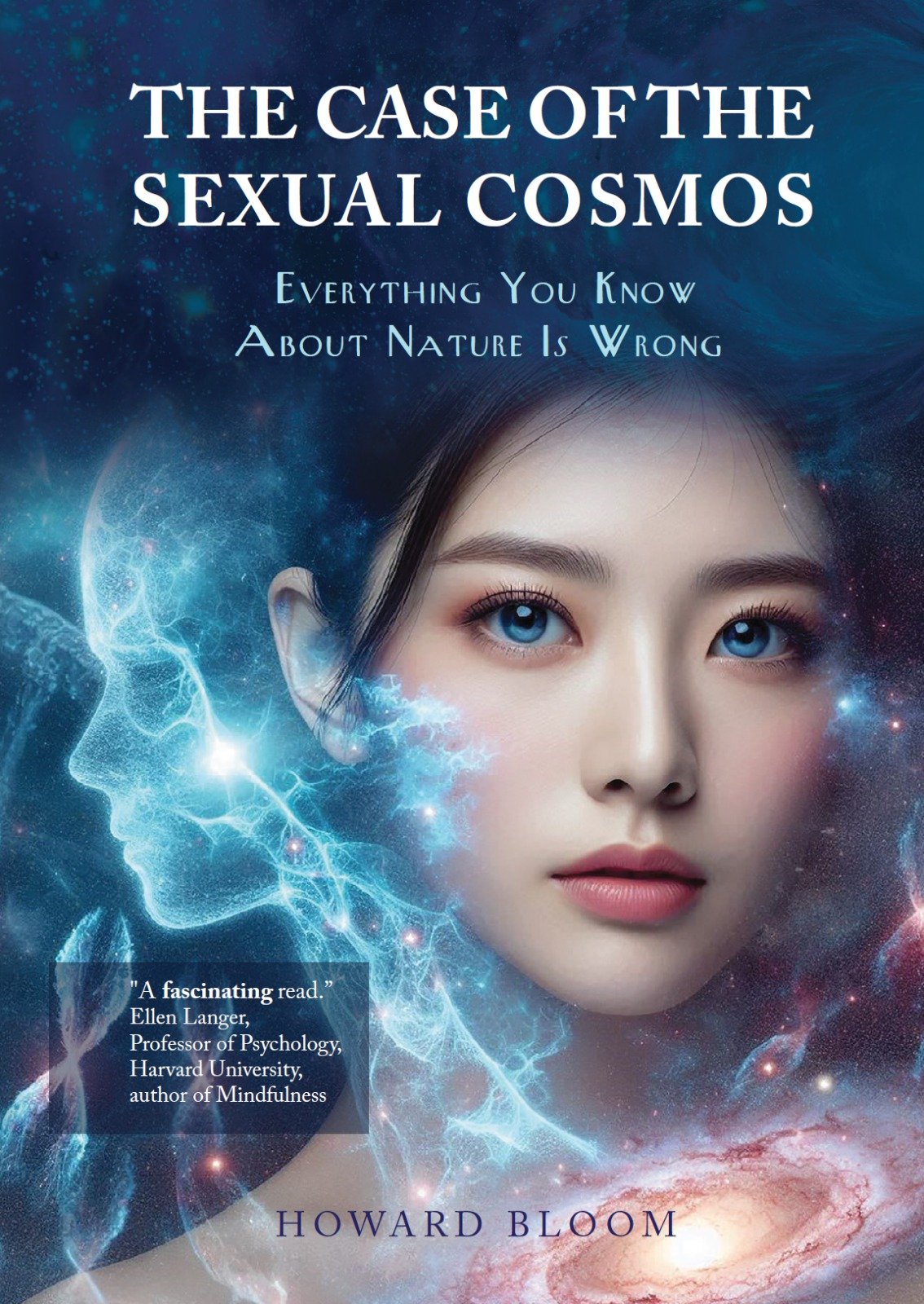
His published works, including The Lucifer Principle, Global Brain, The Genius of the Beast, The God Problem, and How I Accidentally Started the Sixties, explore the mechanisms that shape society, competition, cooperation, creativity, and human progress.
His theories have inspired both admiration and debate, attracting attention far beyond the entertainment industry.
Britain’s Channel 4 placed Bloom within a discussion of history’s most consequential intellectual figures, while Gearmagazine compared his potential influence to that of Stephen Hawking.
Today, Bloom’s career stands as a fascinating example of what happens when one person refuses to accept the boundaries separating different fields of knowledge.
Science informed his understanding of culture. Popular culture supplied new questions about psychology and collective behavior. His experiences in entertainment became material for further intellectual exploration.
The result is a life that defies easy description.
Howard Bloom began as a boy trying to understand the universe.
He became a man who helped tell the stories of some of the most famous performers on Earth.
And through it all, he remained driven by the same fundamental question:
What are the hidden forces that make extraordinary things happen?
For Bloom, the universe has always been bigger than the stars in the sky.
Sometimes its greatest mysteries are found in the stars standing on a stage.
Learn more about Howard Bloom and his remarkable career:
Official Website: https://www.howardbloom.net
Watch the Howard Bloom video: https://www.youtube.com/watch?v=wdJyafSBCb0